On Managing Stress in Modern Times
Re-Considered by Yusuf Kemal Kasideci ·
In our modern world, stress has become as ubiquitous as water itself. Scientists say that our bodies are 70% water; a modern human ensnared in the hustle culture of our frenetic times would beg to differ. They'd probably be of the conviction that we're 70% stress these days. Such a facetious notion would be comical — even funny — if it wasn't so tragically true.
Stress management has skyrocketed in its importance, and there has never been a better time to learn how to manage stress. In this article, I'll be giving you some tips I personally use and find very helpful.
Become the Solution-oriented Problem-solver
In this day and age, where challenges, problems and stress-factors seem to galore. The problem is that we try to solve problems by solely focusing on the problems themselves, instead of the solutions to the problems.
If you wish to solve a problem, do not invest your time and energy in thinking about the problem, but expend your time and energy on the solutions.
If you keep thinking about problems, then the problems will persist. If you think about the solutions, then the solutions will come to you.
Shift Your Point of View
Changing one's perception of reality is also crucial. What we see depends highly on the lens we look through. Our interpretation of reality defines how we end up perceiving it and thereby how it makes us feel, which in turns influences our response. How we define our reality is how we’re going to experience our reality.
Mindfulness is a potent way of doing just that. The reason is simple: because to change something you first have to identify what that something actually is, what it entails, what it means. You have to be aware and conscious of its existence. To solve a problem, you first have to recognize it exists. The same applies to our thoughts, emotions and triggers.
So what I learned is to simply observe my thoughts, emotions and be very aware of my triggers. When something triggers me, or annoys or upsets me, I imagine two streams going through my head and chest; one carrying my thoughts, and one my emotions, respectively.
I then observe them and I ask:
"What's making me feel this way?"
"What has triggered this emotional reaction/arousal/sensation?"
"What message do you have for me?"
"What are you trying to teach me?"
"What can I learn from this?"
Science indicates that we react in a split-second, long before we even have said anything. This is particularly true of our body language. Science has also shown that intense feelings move through our body and are released within 90 seconds. So when something happens to us that triggers us, the initial tumult of emotion is over and gone within a minute or two. So feel it and then flush it.
Be aware of how you react. Be mindful by asking yourself questions that help you be more aware of the impact of your next word or action.
Simply not reacting on the spot is a superpower. You can choose to anchor yourself in the power of calm, and not let anyone else have control over your state of being and consequently your quality of life. The greatest enemy you'll have to deal with is your own mind. Nothing can trouble you more than your own thoughts. After all, when you think about it, isn’t it our thoughts about things that upsets us and not the actual thing?
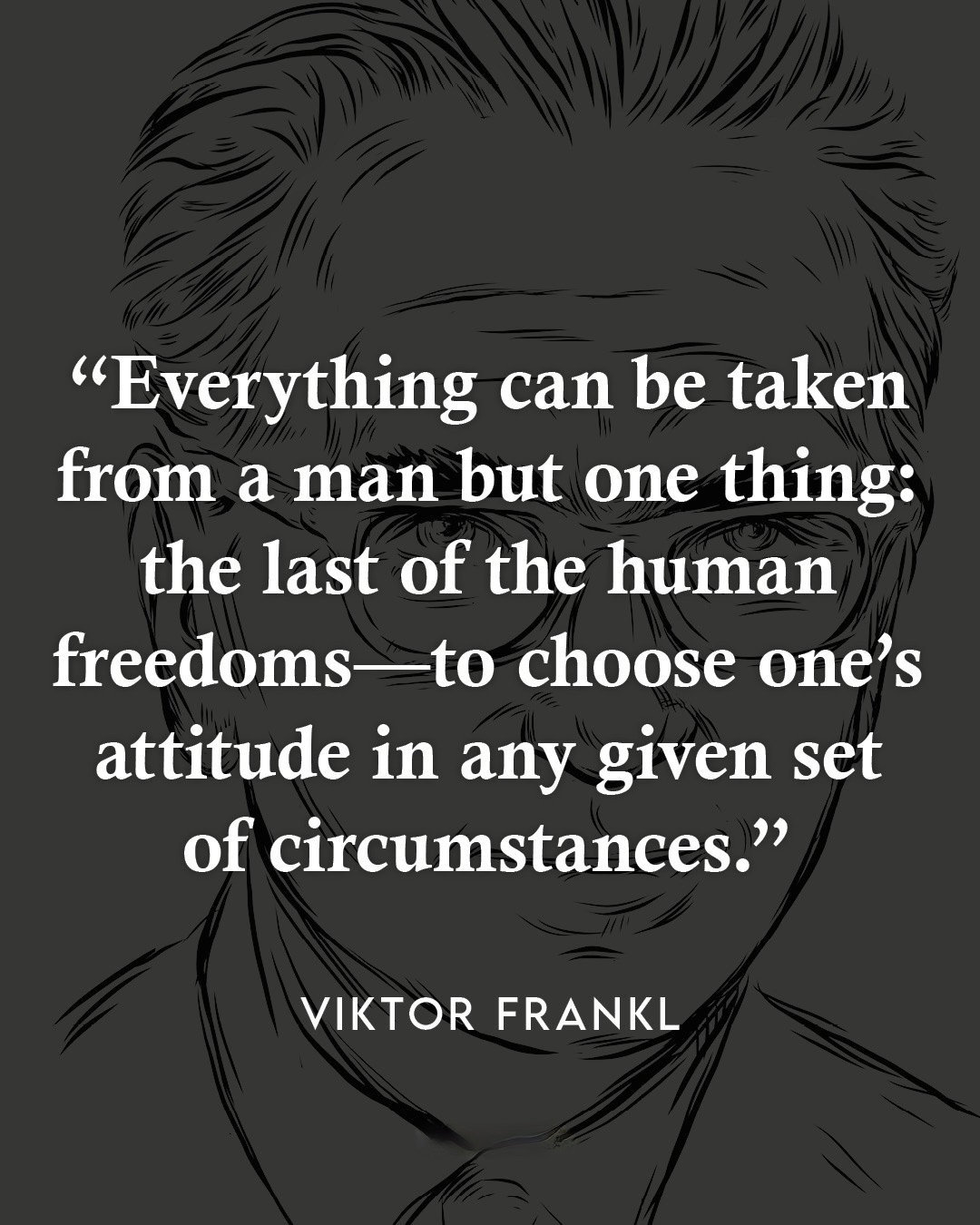
If there's anything I learned it is this: We may not control even 10% of what happens to us, but we can control 100% of how we respond to it, because we have 100% control over our mind. That is our greatest superpower; our attitude, how we react — how we choose to interpret whatever happens.
The Power Of The Question Mark
One way to make sure we do not fall into the trap of getting bogged down in the problems themselves is to ask questions. Nothing to believe here. It only requires us to have the courage to ask them. As the old proverb goes, "He who asks questions cannot avoid the answers."
Instead of simply making a declarative, limiting statement like "I cannot do this" or "I cannot afford this", try doing this instead; ask yourself:
"How can I afford this?"
"How can I achieve it?"
"How can I get it?"
"How can I succeed?"
And you'll find that the answers are starting to come to you. You may not end up having a eureka "aha" moment each time, and the answer may not always come promptly, but you'll be on your way to finding solutions and resolving your problems.
The reason this is so effective is that while a statement closes the mind, a question opens it. Statements are declarative judgments, which means that they’re close-ended. Questions are like can openers, they encourage us to become aware of the hidden solutions that exist.
The result is that we shift from a judge-and-be-judged manner of thinking to a learn-and-help-learn mindset. In other words, it's about being curious and willing to grow. You're not entangled in the habit of judging, either yourself or others, any longer. Instead you're simply being curious and willing to come up with new and different ways of thinking about important matters in your life, and finding creative solutions to those problems.
This is why asking questions leads to a path that ends with a solution to the problem at hand. But making a declarative statement like "I cannot do this" or "This is the way it is" prevents us from actually directing our energy to finding solutions because our energy is unconsciously being expended elsewhere — on the problem itself.
A German Word ...
Oftentimes what causes stress is our ostensible inability to find alternative solutions to problems. Think about it. You're stuck in a situation, a predicament, and you feel there's a solution to it, but there's only one problem: it's a solution you do not like or are unwilling to implement.
Imagine it. Look back at a time where you've been in such a situation. Wouldn't it stress you out to feel like there's only one solution, and yet you feel like you shouldn't go ahead with it? Wouldn't it feel as if this solution isn't even valid and thus the problem at hand only has a pyrrhic solution, and therefore, in reality, no solution?
The effect we feel when we fixate on one solution — or one single path to finding a potential solution — is called the Einstellung Effect. It is when the first idea that comes to mind, triggered by familiar features of a problem, prevents a better solution from being found. This is what happens when our vision tunnels. When the brain's natural tendency to simplify things and we start believing that that solution we found — which, again, is far from ideal — is indeed the only one.
As Jeff Haden, at Inc.com wrote
Or in nonresearcher-speak, when I think I know the answer, my vision tunnels. I'm a hammer, so the problem is surely a nail. And anything that appears to confirm that the problem is a nail makes me not only more likely to follow that path, but also to feel good about following that path.
So how do we avoid falling for the pernicious Einstellung effect?
Simple. Just remove — at least temporarily — the first solution you came up with.
Pretend as if you cannot implement it, you cannot do it. It's off the menu, not available anymore. This works even if the first solution is quite desirable. You'll be amazed by just how oftentimes much better solutions are lurking on the horizon if you only take away the possibility of adopting that first solution your mind came up with.
Simply be open. This also enhances your self-confidence. As former CEO of General Electric and respected writer Jack Welch taught us, True self-confidence is nothing less than having the courage to be open; open to change and new ideas, regardless of their source.
So be open-minded. And Remove the possibility of that first solution.
You can read more on the Einstellung effect here.