The Power of Choice — along the Path to Freedom and Inner Peace
Re-Considered by Yusuf Kemal Kasideci ·
I once heard someone say, "The gift of choice is a gift that's given to you that nobody can take away from you" and it made me ponder...
"Indeed!" I chirped in delight. We possess far greater freedom over our suffering than we may suppose, because we can change not only how we interpret emotionally hurtful situations, but how much importance we assign to them in the first place. We are confronted with the gripping question of whether or not we indeed do have the choice to free ourselves from the emotional clutch of somebody by simply choosing to forgive them.
But can we really choose to let go of our clingings and egoistic attachments? How free are we truly? As creatures of habit seeking to manipulate and mould the world in our image, we get angry and frustrated when somebody behaves in a way we perceive to be incongruous with how we would've behaved in their place. But fail to see the elephant in the room: that the roots of the lush forests of disappointment are cultivated primarily via the torrential downpours of expectations.
Know Thyself
Forgiveness is one of the trickier moments we get to face as humans. A friend of mine once told me, "Know yourself, and you'll understand any reflection." That both struck me and stuck with me. I'd humbly invite you to ponder its meaning. Perhaps what the school of hard knocks keeps trying to teach us is that people’s attitude towards us is merely a reflection of their own reality, their own state of being, their own mindset; it’s not about us — and it probably never was.
If we accept this as true, then we can say that people's responses to us are often rooted in somethings that have nothing to do with us — perhaps it was their childhood experience where a relative had roused their anger, they just didn't know where to vent or how to handle their feelings, and so we simply ended up bearing the brunt of that emotional repression.
Perhaps they were just coming back from the hospital after a long day of consoling and providing support to an ailing family member. Perhaps they were feeling down that day. Indeed they might've had a rough day or had to tolerate a scathing rebuke from their boss. The possibilities are endless and so are the reasons that might influence people's behaviour towards us.
What helps us to limit our suffering in such situations is recognizing that any hurtful or insensitive responses from others are merely a reflection of their emotional state and that we, thus, shouldn't take it personally. If we take everything too personally, then we suffer more than necessary.
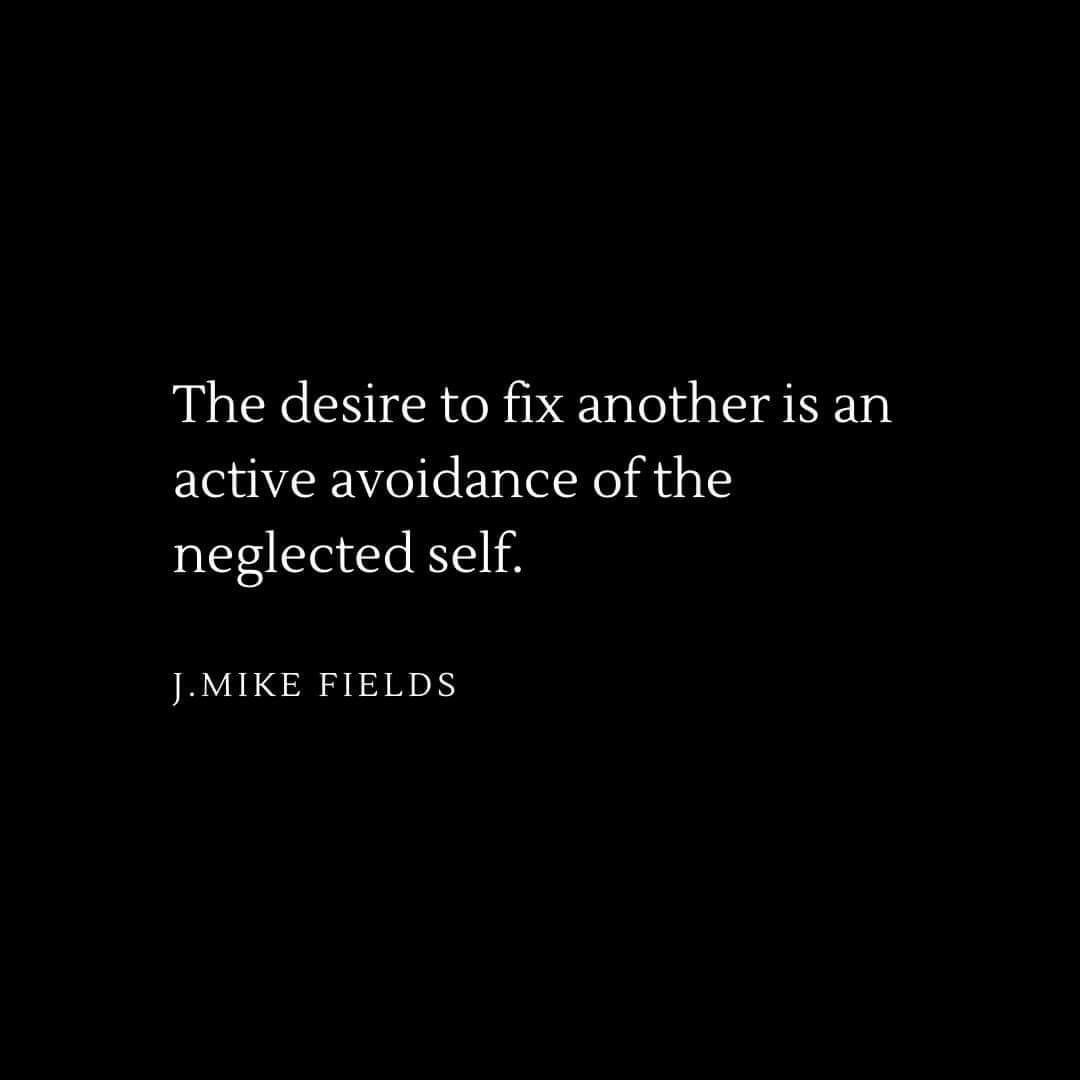
Of course, it's not always the other person. Again, to say know thyself and you'll understand any reflection, cuts both ways. Indeed, what we judge in others is often merely a projection of our own inner, untended wounds. What we suspect or assume about someone else can reveal to us the darkness we bear inside ourselves. And it is our desire to fix others that prevents us from becoming better, because it distracts us from our own neglected selves.
Following the premise in that sense, we also have to recognise when we have wronged someone and have thus rightfully incurred their resentment. Sometimes the problem is indeed inside us. Our duty is to then seek to heal ourselves of the pain we've been neglecting for so long. Naturally, self-healing can feel daunting at times and we may not know where to start. I myself wasn't sure how or where to start healing myself. It was only when I dared to befriend the ghost of my 12-year-old self — and decided to forgive my younger self for his inaction on the call of duty that stirred his spirit — that I could forgive myself for being just human.
I could've been a superstar social justice activist, and I knew it back then, and yet, I still didn't act on my higher calling. It haunted me for years. All until one day I decided to finally let go of my attachment to the past.
That was the moment I'd become free from the shackles of a past that cannot be altered. I felt empowered after letting go of what no longer served me — letting go of what has already gone by. That's when I finally got to accept that which could never be changed.
Forgiveness, it turned out, was about relinquishing the struggle to make the past any different. And when we show that forgiveness to ourselves, only then can we have the right to ask others to show it to us too.
What You Look For, Ye Shalt Find
Thich Nhat Hanh once said, "Every single person contains the seeds of goodness, kindness, and enlightenment. We all have the seed of buddhanature. To give the buddha in you a chance to manifest both in yourself and your loved ones, you have to water those seeds. When we act as if people have these seeds inside them, it gives us and them the strength and energy to help these seeds grow and flower. If we act as if we don't believe in our inherent goodness, we blame others for our suffering and we lose our happiness."
What we see depends on the lens we look through. If we focus on the goodness in people, then that's what we're going to see. If we focus on the bad and evil in people, then that's what we're going to see. So, even though someone's bad side may be manifest and evident, we can nonetheless choose to see the good in them and through that attract the immanent goodness within. After all, if you keep looking for the bad in people, you will surely find it.
Everyone makes mistakes in life. Sometimes good people make bad choices. But that doesn't mean they're bad — it just means they're human. Perhaps wisdom would have us pause and then think about why others showed up in the way that they did. Besides, we are not defined by our mistakes, but how we deal with them. Granted, we should also exercise discernment of who we're expecting goodness from. Indeed, expecting an adherence to virtues or manners of rectitude from foolish, ignorant people is the surest path to bona-fide and utter disappointment.
Making a Mountain out of a Molehill
Author of Breakthrough, Dr. Ahmed Hankir had a profound aphoristic saying: “If we realised that many people are wounded children trapped in adult bodies, it would help us not to take things personally.”
Yet, we revel in taking offence. We surrender ourselves to the most insignificant mistakes of others, our minds mired in an unceasing crusade as it scrambles to convince us of the intentionally malicious nature of the behaviour before us. But who ends up paying the price for this oversensitive oppugnance?
We have been conditioned to believe that it is a sign of strength to hold grudges and to hold every little thing done to us against its perpetrators, as if that was our power — a way to prove to the world that we are indeed 'tough' or perhaps that we didn't forget what was done to us. Upon closer examination, however, you get to see how, actually, it takes a whole lot more strength to forgive than it does to bear a grudge. It is such a foolish act to mar our tender hearts with the venom of someone else's behaviour.
Humans have a knack for collecting things: pins, letters, postage stamps, rocks, alongside many other peculiar objects. But for many of us, what we collect is our hurt, consigning it to repositories of "righteous" resentment. Indeed, we are masters at creating our own suffering. When we refuse to forgive another person, we perpetuate our suffering — and theirs.
But there's another path we can choose. Because we need not be held hostage by the actions of others, nor by our own. The very act of forgiveness is simply a releasing of fear. When you release the fear of another, they may find it in themselves to be forgiving as well, and you may move together towards a new rekindled connection under the light of love. When we release the fear of another, we free ourselves from being a prisoner of someone else's actions. Deciding to let go of what no longer serves us spares us from unnecessary suffering. All we have to do is release the manifold dramas we drag with us from bygone times.
And so, what do you need to release at this moment to allow yourself to be freer?
Forgiveness as an Act of Self-Love
I had once read, ‘The first to apologise is the bravest, the first to forgive is the strongest, and the first to forget is the happiest’.
So perhaps the question is:
When do you simply need to let go of your resentment and anger, even if it means allowing somebody to be wrong about you?
It is important to remember that forgiveness does not acquit the other person. It does not vindicate nor excuses their behaviour. Forgiveness is simply a gift you grant to yourself. So you don’t need to forgive others necessarily because they deserve forgiveness, but because you deserve to live in peace.
"Keep in mind that forgiving is not for others. It is for you. Forgiving is not forgetting, It is remembering without anger. It frees up your power, heals your body, mind and spirit. Forgiveness opens up a pathway to a new place of peace," said Les Brown.
After all, when it comes down to the truth of it, why would you ever let anyone walk in your mind with their dirty feet, steal your peace-of-mind and be granted control over your quality of life?
Why would you ever do that?
The Wisdom From Auschwitz
Holocaust survivor, Eva Mozes Kor, who was one of the Mengele Twins, after decades of righteous resentment and indignation, ended up realising the superpower she always had: the power to choose forgiveness.
"What I discovered for myself was life-changing. I discovered that I had the power to forgive. That I, the little guinea pig of 50 years, even had the power over the angel of death of Auschwitz. As a victim of almost 50 years, I never thought that I had any power over my life. I felt free — free from Auschwitz, free from Mengele," she said in an interview.
She then continued, "Forgiveness is nothing more, and nothing less, but an act of self-healing, an act of self empowerment. Pain was lifted from my shoulder, that I was no longer a victim of Auschwitz, that I was no longer a prisoner of my tragic past — that I was finally free."
She finished with these words about the Power of Choice:
"I want everybody to remember that we cannot change what happened. That is the tragic part. But we can change how we relate to it."
The Forever War
We finish off with a word on how refusal to forgive can be self-defeating and sabotage the very thing we hoped would stay unstained.
Indeed, at times, you may fight with those you love; you may argue, you may get upset, you may even decide to cut off contact for a while. Your mind may have you convinced that you’re distancing yourself only for the greater good of the relationship, that you’re “saving” it by teaching the other person a lesson.
But inevitably, you get to a point where the struggle has outlived its purpose. And that’s when you realise that the battle you’d clung to so tenaciously no longer justifies the cost — and that the war you’d been waging now threatens to destroy the very relationship it was meant to protect.
And should you ever find yourself in such a predicament, remember that you don’t have to stay there any longer. Here, the power of choice is within your hands: lay down your weapons; take off your armour; walk off the battlefield — just let go of that argument and forgive. Because otherwise, you’ll have to let go of the person you love and have been battling so hard to keep.
Ineluctably, at one point or another in our lives, we are offered two paths: that of forgiveness, and that of non-forgiveness. Two paths to choose from. Two paths to exercise our solemn right — our Power of Choice. There, we are challenged to let go of our grievances and our senseless dramas, perhaps in the hope that we would one day realise that the people we love will forever be more important than proving a point — as they always have been.
And that is a choice for each of us to make.